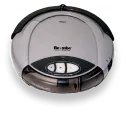

The appearance of a vacuum robot in a prehistoric campsite would have initially caused fear. Accustomed to a life centered on nature and survival, primitive humans would have perceived this autonomous and noisy device as a threat. The strange movement of the device, unknown and uncontrolled, would have aroused suspicion and incomprehension.
In this scenario, the "Robo-Sec" would be a prehistoric vacuum robot powered by solar energy or biomass, made of advanced materials and capable of moving freely in cave dwellings.
What would be the impact of Robo-Sec in Prehistory?
Published on 16/12 at 6pm
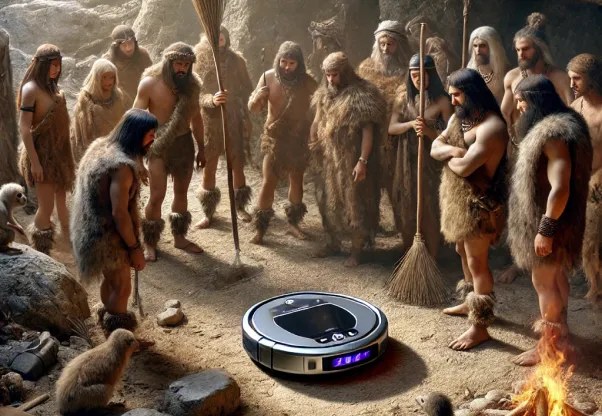
The Robo-Sec emerging in a prehistoric campsite, a world where technology is still in its infancy.
I/ The reaction of the first humans
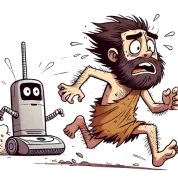

After this initial shock, curiosity would have taken over. Prehistoric humans, seeking to understand their environment, would have tried to observe and touch it. The vacuum cleaner, moving without human intervention, would have generated questions about its autonomy and function.
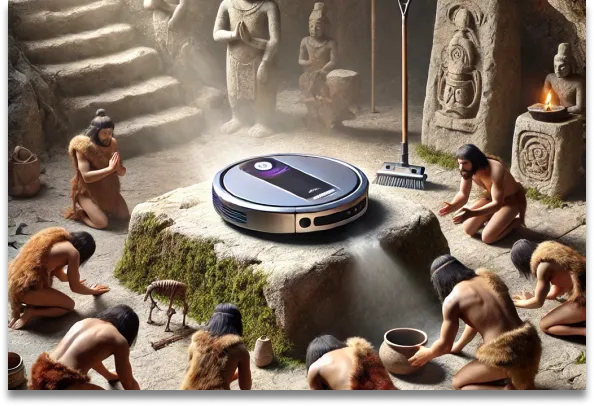
Unable to grasp its operation, some might have attributed mystical powers to the robot. In a culture where the inexplicable was often linked to the supernatural, it could have been revered as a divine entity, a sacred totem bringing protection and prosperity. Offerings would have been made around this "mechanical spirit", crystallizing the boundary between technology and belief.
II/ Social and environmental impact
The introduction of a vacuum robot into prehistoric society would have profoundly changed daily tasks and social dynamics. By taking over cleaning, it would have allowed humans to devote more time to essential activities such as hunting, gathering, or crafts. Household chores, perceived as tedious, would thus have been relegated to the background.

The control of this technological object would also have redefined the social structure. Those capable of mastering and maintaining the robot would have gained high status, becoming figures of authority and forming a new technological elite. This evolution could have created tensions between those who benefited from this advancement and others.
Moreover, the presence of the robot would have impacted interactions with animals. Birds and felines would have had to adapt, some becoming curious observers while others would have avoided the robot out of fear.

III/ Misuse of the robot
The arrival of a vacuum robot in a prehistoric context would have led to unexpected and creative uses. Beyond its cleaning role, this object would have been reinterpreted as a multifunctional tool.
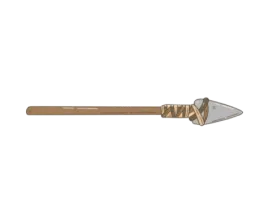
First, as a hunting tool, humans would have realized they could use it to their advantage. By attaching spears or traps to the robot, they would have created a mechanical "hunter" capable of approaching prey without arousing suspicion.
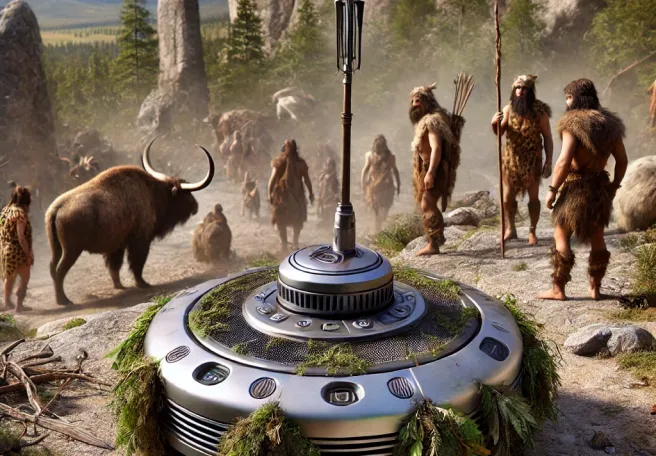
This trick would have increased the chances of capture. Additionally, by camouflaging the robot with foliage and moving it to hunting areas, it could have attracted animals to traps.


At the same time, the robot would also have been a source of entertainment. Children, fascinated by its unpredictable movements, would have integrated it into their role-playing games, thus strengthening social bonds and developing their creativity.
Finally, the vacuum robot could have been perceived as a pet. Humans, seeking companionship, would have projected emotions onto this object, creating an emotional connection. Care rituals around the robot might even have emerged, considering it as a member of the community.

Thus, the creative use of the robot would have enriched the daily life of the first humans, illustrating the complexity of the relationship between humans and technology, even at that time.